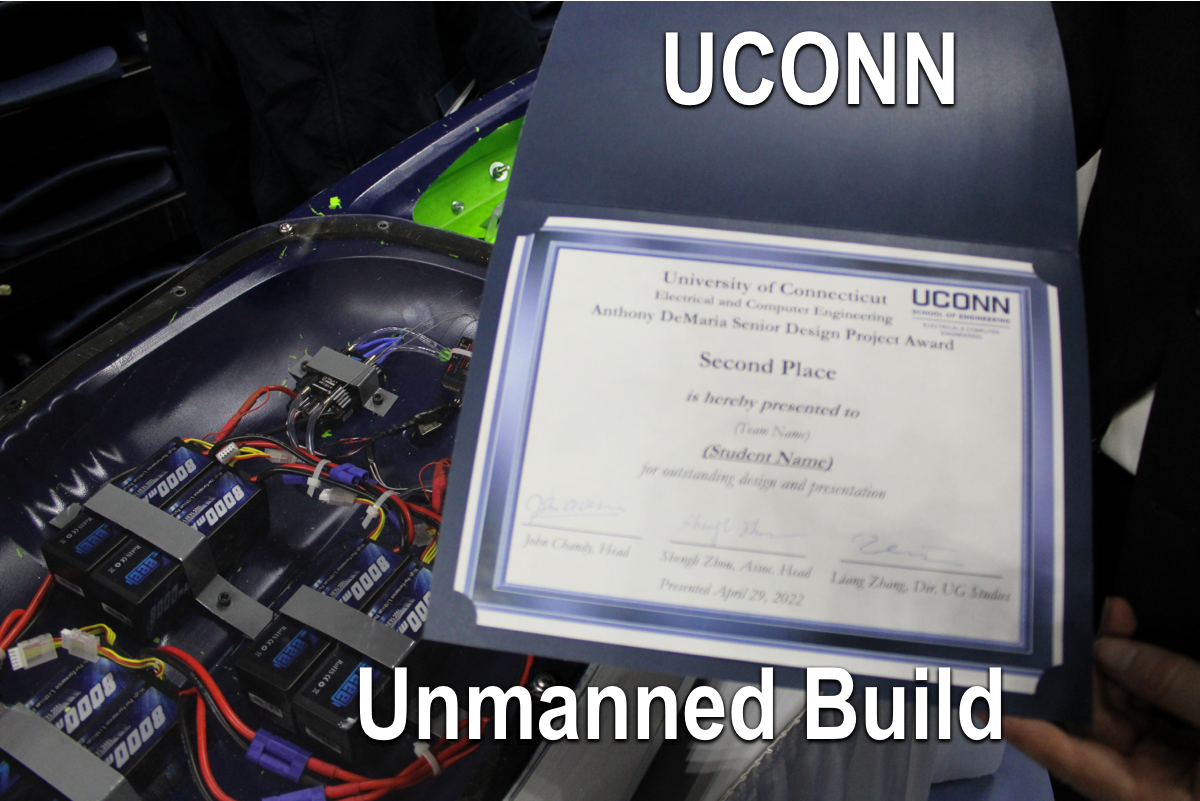
 Click here to
see their full paper. Here is the abstract:
This report details the research,
design, fabrication, and testing process for the American Society of Naval Engineers (ASNE) electric-powered
boat competition. The challenge of this
competition is to design and build a boat from scratch, and then race it around a 5 mile course
(fastest time wins). In a greater context, the ASNE competition is organized to further promote
electric rather than non-renewable propulsion methods for waterborne transport. The challenges
associated with designing and building an electric powered boat from scratch are deciding on a
power delivery system, designing a hull, and fabricating the boat itself. The first of the
challenges, the power system, is arguably the most important part. The motor and battery had
to be powerful enough to move the boat at a sufficient speed, as well as light enough to operate
efficiently. Since the boat is unmanned, a remote control system was devised to maneuver the
boat from the shore. There also needs to be a drive system that connects the motor to the
propeller or jet drive with minimal mechanical loss. It is extremely important that the hull, the
second challenge, protects the motor from water damage. An ideal hull is sleek, lightweight and
has low drag to cut through the water fast and efficiently. Finally, the boat is made from scratch,
so building and testing through trial and error are paramount for a quality finished product. All of
these considerations were met with a limited budget, so cost effectiveness was extremely
important as well. The design of the hull had to limit the amount of drag force and be stable
enough to support the weight of the components. The batteries had to provide enough power to
the motor for the entirety of the five-mile course. The motor and drive system had to also
provide enough torque and speed to complete the course in the least amount of time.